
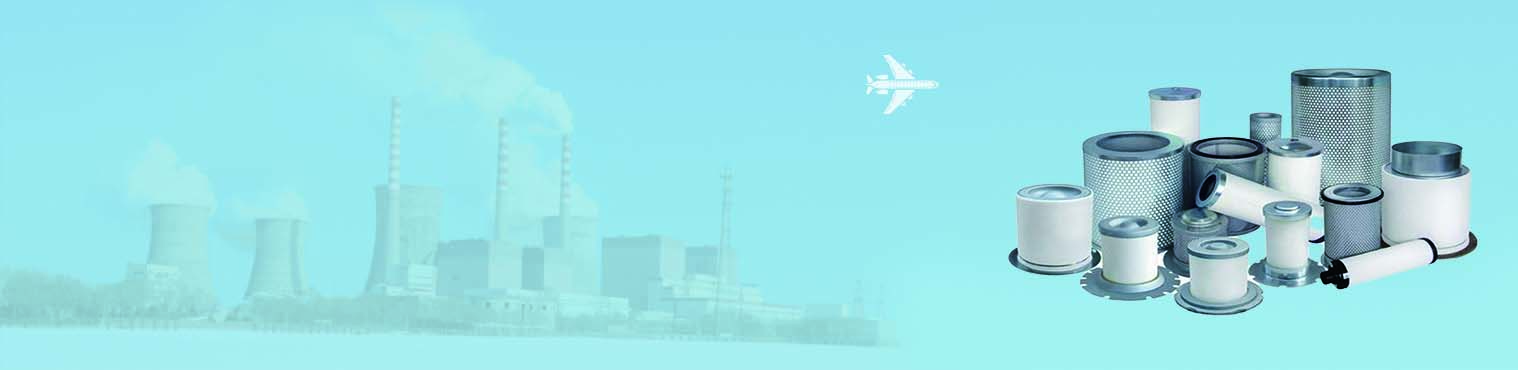
Coalescing Filter vs Oil Mist Filter: What’s the Real Difference?
In many RFQs and technical inquiries, we often see one common situation:
The terms “coalescing filter” and “oil mist filter” are used interchangeably.
Although both are related to oil removal, they serve different purposes in industrial systems. Choosing the wrong one may lead to performance problems, short service life, increased maintenance costs, or even system contamination.
If you are responsible for sourcing industrial filters, this guide will help you clearly understand the difference.
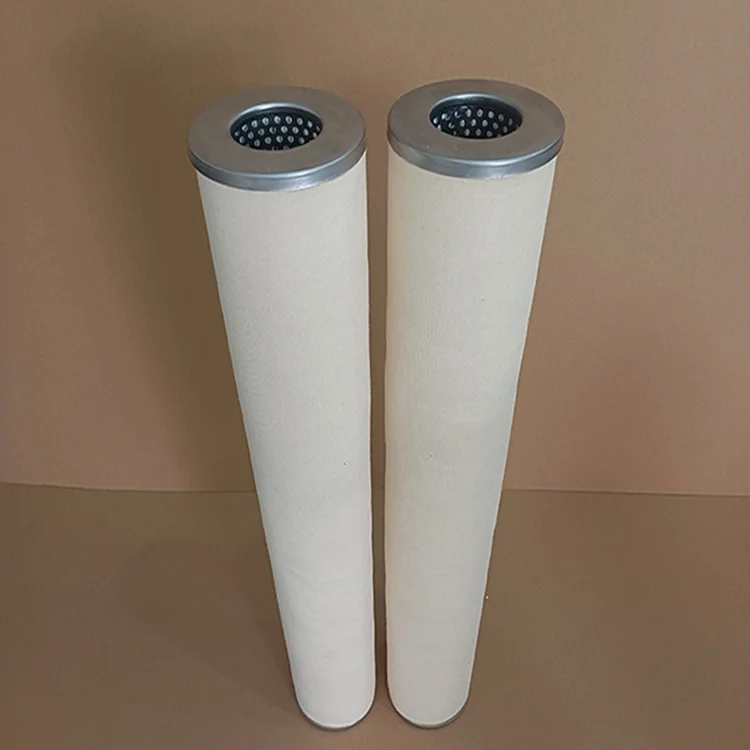
What Is a Coalescing Filter Element?
A coalescing filter element is designed to remove very fine liquid droplets—such as oil or water—from compressed air or gas streams.
It functions as a high-precision gas purification device.
How Does a Coalescing Filter Work?
Air or gas containing fine oil droplets passes through specialized filter media.
Tiny droplets collide and merge together (coalescence process).
Larger droplets are formed and fall into a drain chamber due to gravity.
Clean and dry air continues downstream.
Typical Applications
Compressed air systems
Instrument air lines
Natural gas pipelines
Petrochemical processing systems
If your system requires clean and dry compressed air or gas, you are most likely dealing with a coalescing filter element.
What Is an Oil Mist Filter Element?
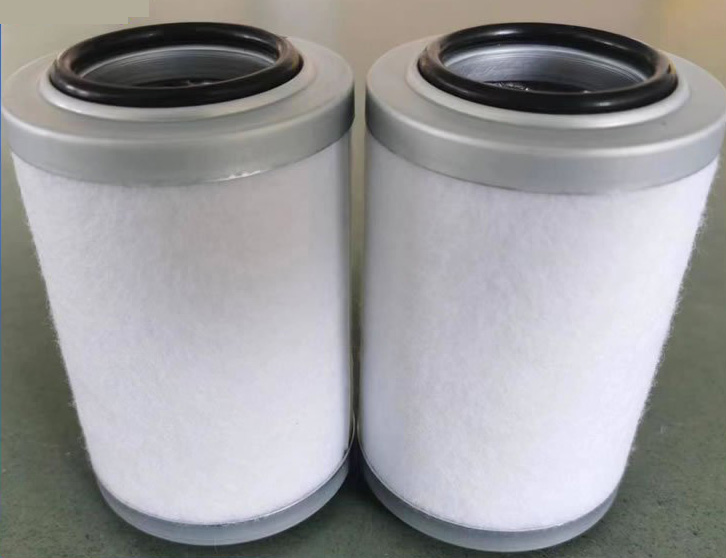
An oil mist filter element is typically installed at exhaust outlets, especially in vacuum pumps or air compressors.
Its main purpose is to capture oil mist from discharged air and prevent environmental contamination.
How Does an Oil Mist Filter Work?
Oil mist in exhaust air enters the filter.
Oil droplets are captured by the filter media.
Clean air exits the system.
Collected oil can be drained or recycled.
Typical Applications
Vacuum pump exhaust systems
Compressor discharge outlets
CNC machine lubrication systems
Industrial lubrication equipment
If the filter is located at the exhaust or outlet of a machine, it is usually an oil mist filter.
Key Differences Between Coalescing and Oil Mist Filters
Here is a simple comparison to help buyers quickly identify the correct type:
| Application Scenario | Required Filter Type |
|---|---|
| Installed inside a pressurized air or gas pipeline | Coalescing Filter |
| Installed at an exhaust outlet | Oil Mist Filter |
| Requires very high filtration precision | Coalescing Filter |
| Focused on oil recovery and emission control | Oil Mist Filter |
Why Choosing the Wrong Filter Can Be Costly
From a purchasing perspective, selecting the wrong filter type may result in:
Higher pressure drop
Reduced service life
Oil carryover issues
Increased maintenance costs
System instability
In some cases, the filter may physically fit the housing—but fail to perform correctly.
This is why understanding the installation position and working conditions is more important than simply matching dimensions.
What Buyers Should Confirm Before Sending an Inquiry
To avoid confusion and ensure accurate quotation, buyers should confirm:
Is the filter installed in a pipeline or at an exhaust outlet?
What is the system pressure?
What is the oil concentration level?
What filtration efficiency is required?
Providing these details allows suppliers to recommend the correct solution and avoid unnecessary trial and error.
Conclusion
Coalescing filter elements and oil mist filter elements may look similar, but they are engineered for different functions in different system positions.
For buyers, the key is not just comparing prices—it is understanding the functional role of the filter within the system.
At FiltraMate, we supply both coalescing filter elements and oil mist filter elements and regularly assist customers in selecting the appropriate solution based on real working conditions.
If you are unsure which filter type fits your application, feel free to contact us. A brief technical discussion today can prevent costly mistakes tomorrow.