
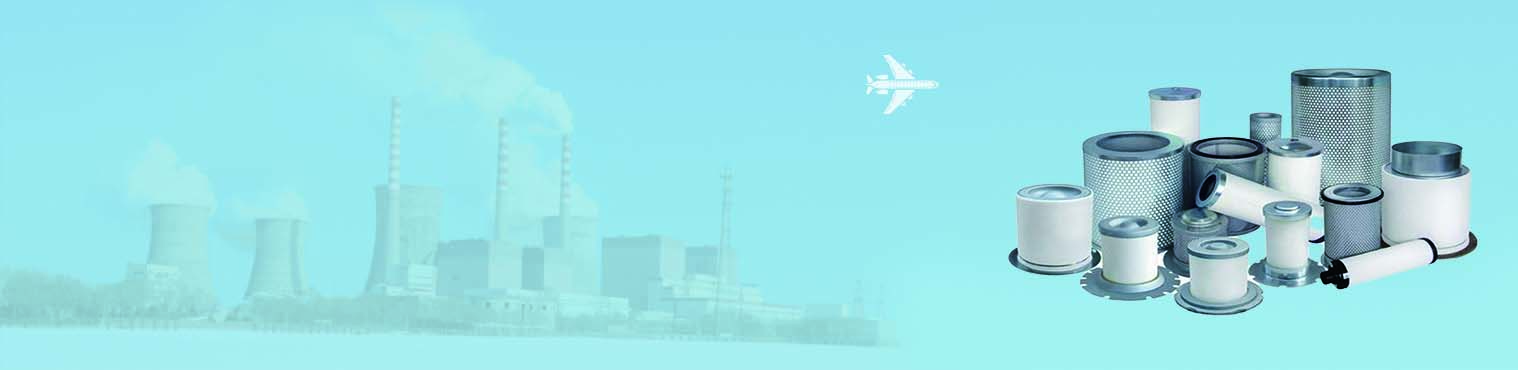
Oil Mist Separator Filter Element: Functions, Media Selection & Applications
In modern industrial systems, oil mist is more than just a visible emission — it is a hidden cost.
It affects air quality, increases maintenance frequency, contaminates downstream equipment, and reduces overall system efficiency.
Oil mist separator filter elements are designed to solve this problem by capturing and separating fine oil aerosols from air or gas streams. However, not all oil mist separators are the same.
In this article, we will explore:
The main functions of oil mist separators
How filter media selection affects performance
Key parameters engineers and buyers should evaluate
Typical industrial applications of oil mist separators
What Is an Oil Mist Separator Filter Element?
An oil mist separator filter element is a coalescing filtration component designed to remove fine oil droplets suspended in compressed air or gas streams.
Instead of simply blocking contaminants, the filter works by capturing microscopic oil aerosols and allowing them to merge into larger droplets. These droplets then drain away by gravity.
This mechanism is particularly important in systems where oil-lubricated equipment generates aerosolized oil particles. all oil mist separators share the same objective — efficient removal of oil aerosols from air streams.
Common applications include:
Screw air compressors
Vacuum pumps
CNC machining ventilation systems
Industrial oil mist collectors
Gas treatment systems
The goal is not only emission control, but also equipment protection and energy efficiency.
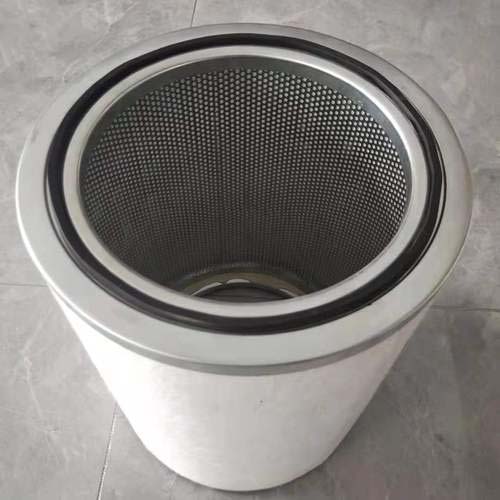
The most widely used type is the cylindrical oil mist separator, commonly found in screw air compressors and vacuum pumps.
This design typically includes:
Multi-layer coalescing filter media
Inner support core
Outer protective cage
Its compact cylindrical structure ensures stable pressure resistance and consistent airflow distribution. Because of its reliability and easy installation, it is the most common design used in compressor oil-air separation systems.
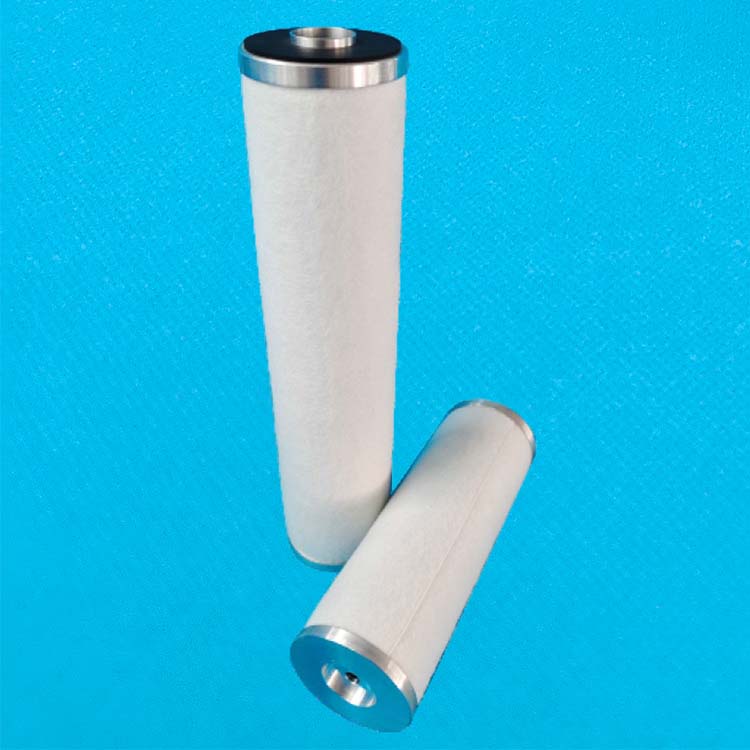
Filter Media Selection: Why It Matters
The filter media is the core component that determines separator performance.
Fiberglass Coalescing Media
Fiberglass is widely used in high-performance compressor separators.
Advantages include:
Excellent sub-micron aerosol capture capability
Separation efficiency above 99.9%
Stable performance at elevated temperatures
This makes fiberglass ideal for demanding compressor systems.
Synthetic Fiber Media
Synthetic materials such as polypropylene or polyester are commonly used for general oil mist collection.
These media offer:
Good chemical resistance
Cost-effective filtration
Stable performance in moderate temperature environments
They are widely used in machining centers and general industrial equipment.
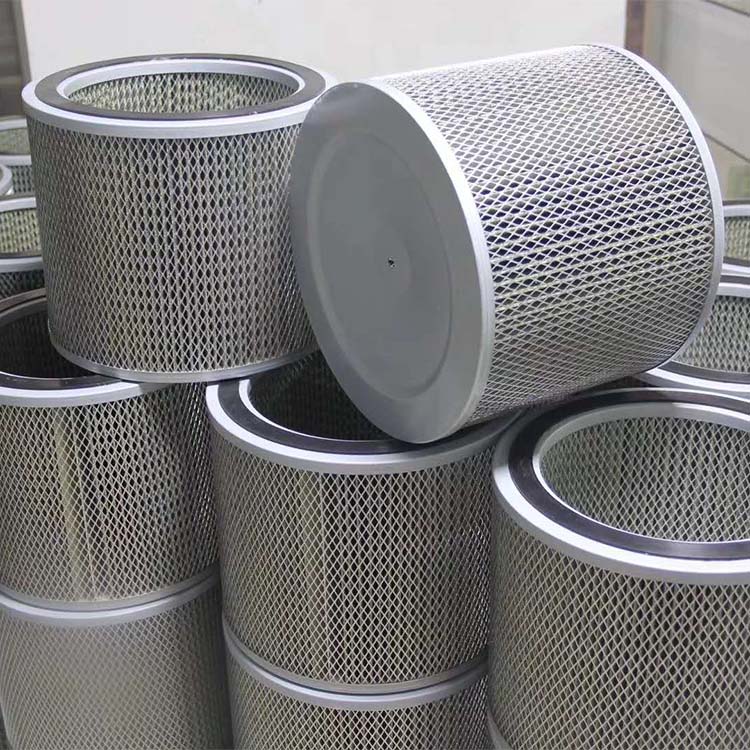
Stainless Steel or Sintered Metal Media
For high-temperature or harsh environments, metal filter media may be used.
Advantages include:
High mechanical strength
Excellent thermal resistance
Washable and reusable structure
These filters are especially useful in industrial gas treatment systems or extreme operating conditions.
Key Performance Parameters to Evaluate
When selecting an oil mist separator filter element, buyers should evaluate more than just size or brand.
Separation Efficiency
Separation efficiency indicates how effectively the filter removes oil aerosols.
Typical performance levels include:
Standard compressor systems: 1–3 mg/m³ residual oil content
High-efficiency systems: below 0.01 mg/m³
Pressure Drop
Initial pressure drop usually ranges between 0.1–0.3 bar.
Maintaining a low and stable pressure drop is important because it:
Reduces energy consumption
Protects compressor performance
Extends filter service life
Temperature Resistance
Operating temperature limits depend on filter media:
Synthetic fiber: 80–100°C
Fiberglass media: up to 120°C
Sintered metal media: significantly higher
Service Life
Under normal operating conditions, oil mist separator elements typically operate for 3,000 to 8,000 hours before replacement.
Correct sizing and media selection are essential to prevent premature clogging or unstable filtration performance.
Typical Industrial Applications
Oil mist separator filter elements are widely used in industries where oil-lubricated equipment generates aerosols.
Screw Air Compressors
In compressor systems, oil mist separators are often called Oil separators, Air/oil separators, Separator filter elements.
They remove oil from compressed air before it reaches downstream equipment, protecting pneumatic tools and reducing oil consumption.
Vacuum Pumps
In vacuum pump systems, oil mist separators are commonly referred to as exhaust filters.
They capture oil mist from exhaust gases and prevent oil emissions from entering the environment.
CNC Machining and Metal Processing
Oil mist collectors improve workplace air quality and reduce contamination on machines, tools, and production surfaces.
Gas Treatment Systems
Oil mist separators remove lubricating oil aerosols before gas enters drying, purification, or combustion stages.
In each case, the separator filter element plays a critical role in system reliability and operational efficiency.
Case Study: Two-Stage Oil Mist Filtration in CNC Machining
In a CNC machining workshop of one of our customers, oil mist, coolant mist, and fine metal dust were affecting air quality and operator safety.
To solve the issue, a two-stage oil mist filtration system was implemented.
Stage 1 – Nano-Fiber Pre-Filter
Removes over 85% of larger oil and coolant droplets, reducing the load on the final filter.
Stage 2 – Glass Fiber Coalescing Filter
Captures more than 95% of remaining fine oil mist and dust particles.
After installation:
Workshop air became significantly cleaner
Visibility improved
Worker health risks were reduced
This case demonstrates how proper filter media selection and staged filtration design can greatly improve oil mist control performance.
Looking for Reliable Oil Mist Separator Filters?
Selecting the right oil mist separator filter element can significantly improve system performance, reduce maintenance costs, and protect downstream equipment.
At FiltraMate, we specialize in manufacturing high-performance filtration solutions for industrial applications. Our filters are designed to match OEM specifications while providing stable performance and competitive pricing.
If you are working on a compressor system, vacuum pump, CNC oil mist collector, or industrial gas treatment project, our engineering team can help recommend the most suitable filtration solution.