
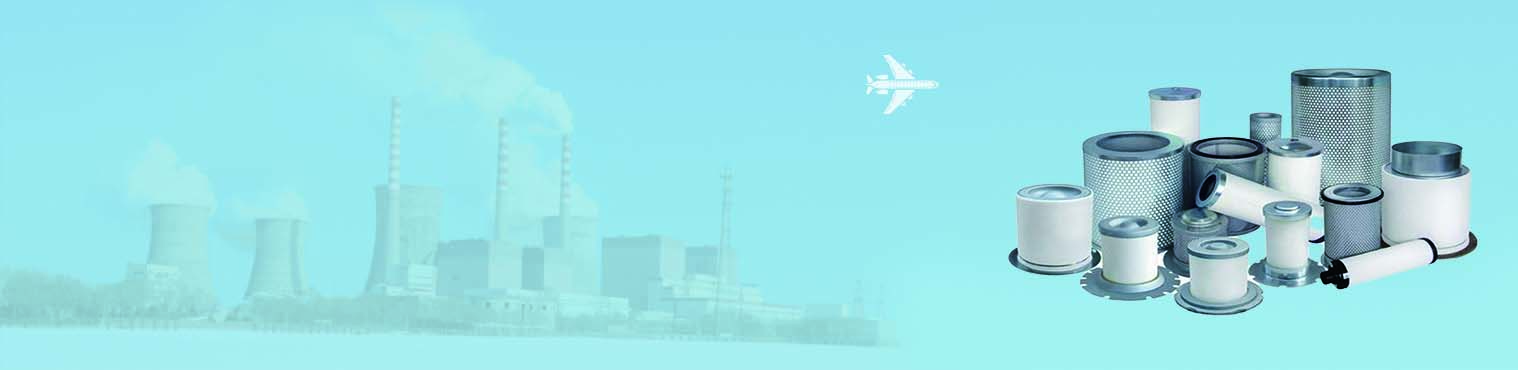
Original vs Replacement Filter Elements: Cost, Quality & Performance
Introduction
When it comes to industrial equipment maintenance, one of the most common questions buyers ask is: “Should I use the original (OEM) filter elements, or can replacement filter elements do the same job?”
Original filter elements are often expensive, while replacement filter elements promise cost savings—but also raise concerns about quality, compatibility, and risk.
The truth is, the difference is not as simple as “original = good” and “replacement = risky.”
In this article, we explain the real differences between original and replacement filter elements in a clear, buyer-friendly way—covering performance, cost, risks, and how to make the right choice.
What Is an Original (OEM) Filter Element?
An original filter element (often called OEM) is supplied by the equipment manufacturer or its authorized partners. These filters are designed specifically for a certain brand and model of equipment.
Typical characteristics of OEM filters:
Guaranteed fit for the original equipment
Designed according to the manufacturer’s specifications
Usually sold through brand channels
Higher price compared to alternatives
Why OEM filters cost more:
Brand value and trademark licensing
Multi-level distribution channels
After-sales service costs included in the price
OEM filters are often chosen for new equipment, warranty periods, or risk-sensitive applications.
What Is a Replacement (Aftermarket) Filter Element?
A replacement filter element is designed to be compatible with the original filter in form, fit, and function, but produced by an independent manufacturer. for example, replacement hydraulic filters are widely used in hydraulic, lubrication, and industrial systems to reduce maintenance cost.
High-quality replacement filters are not “cheap copies.”
They are engineered based on:
Original filter dimensions
Filtration efficiency requirements
Operating pressure and temperature
Actual application conditions
Important note:
Not all replacement filters are the same. Quality depends heavily on the manufacturer’s design capability, materials, and quality control.
Key Differences: Original vs Replacement Filter Elements
| Aspect | Original Filter Elements | Replacement Filter Elements |
| Fit & Size | Guaranteed by brand | Must be accurately engineered |
| Filtration Performance | Meets OEM standard | Can meet or match OEM if well designed |
| Service Life | Designed for standard conditions | Can be equal or optimized |
| Cost | High | Usually 20–50% lower |
| Lead Time | Sometimes long | Often faster, more flexible |
| Supplier Options | Limited | Wide choice, varying quality |
Are Replacement Filters Really Lower Quality?
This is one of the biggest misconceptions.
In reality:
Many OEM filters are produced by third-party manufacturers
Replacement filters often use the same filter media suppliers
Performance depends on design and quality control, not the logo
Example:
A properly designed fiberglass hydraulic filter replacement can achieve the same filtration efficiency and service life as the OEM version—at a much lower cost. In many compressed air and gas systems, properly designed replacement filters perform just as reliably as OEM products.
👉 The key issue is not OEM vs replacement, but good replacement vs poor replacement.
Cost Comparison: What Are You Really Paying For?
When buying OEM filters, you are often paying for:
Brand markup
Distribution layers
Packaging and branding
Replacement filters reduce cost by:
Shorter supply chains
Direct manufacturing
Focus on performance rather than branding
For plants with large quantities of filters or frequent replacements, switching to qualified replacement filters can significantly reduce annual maintenance costs without sacrificing reliability.
The Real Risk: Choosing the Wrong Replacement Filter
The risk does not come from “replacement” itself—but from incorrect selection. In screw air compressors, oil carryover is mainly controlled by the oil separator element. replacement filters are widely used in compressor industry.
Common mistakes include:
Wrong filtration rating (too fine or too coarse)
Incompatible filter media for oil, gas, or chemicals
Flow rate exceeding design limits
Poor sealing design
Result: fast clogging, pressure spikes, or equipment damage.
A reliable supplier should always confirm:
Application conditions
Operating pressure and temperature
Contaminant type
Required service life
How to Choose a Reliable Replacement Filter Supplier
Before switching, buyers should check:
Does the supplier provide technical specifications?
Do they understand OEM design logic, not just part numbers?
Do they offer engineering support, not just sales?
Can they supply consistent quality, batch after batch?
A good replacement filter supplier acts as a technical partner, not just a product vendor.
OEM or Replacement: Which One Is Right for You?
There is no single “correct” answer.
OEM filters may be better when:
Equipment is under warranty
Application risk is extremely high
Brand compliance is mandatory
High-quality replacement filters are ideal when:
Cost control matters
Equipment is mature and stable
You want shorter lead times and flexible supply
The smartest buyers evaluate performance, risk, and total cost, not just brand labels.
About FiltraMate
At FiltraMate, we specialize in OEM-equivalent replacement filter elements for industrial applications, including hydraulic filters, coalescing filters, oil separators, air compressor filters, and sintered metal filters.
Our focus is simple:
reliable performance, consistent quality, fast delivery, and competitive cost—helping our customers reduce maintenance expenses without increasing risk.
If you’re evaluating OEM vs replacement filters for your system, we’re happy to support you with data-driven recommendations.