How Offline Oil Filtration Reduces Maintenance Costs
Oil contamination is one of the leading causes of hydraulic and lubrication system failures. Fine particles, oxidation products, and varnish can gradually damage critical components, reduce equipment reliability, and increase maintenance costs.
In many industrial applications, improving oil cleanliness has become an important part of predictive maintenance and equipment reliability management. This is where offline oil filtration plays a key role.
1. What Is Offline Oil Filtration?
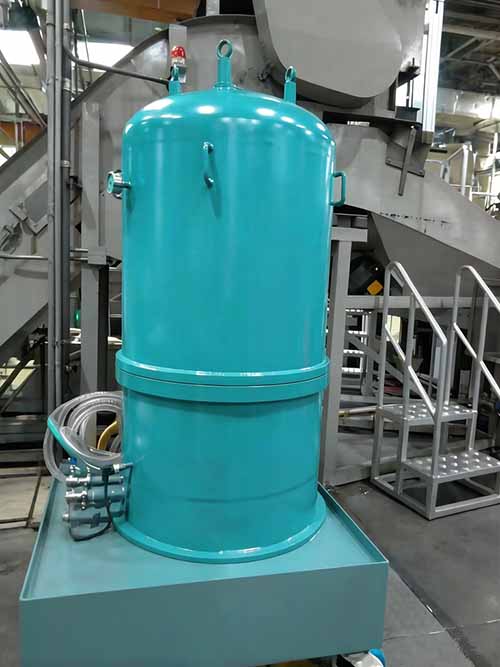
Offline oil filtration, also known as kidney loop filtration or bypass filtration, operates independently from the main hydraulic or lubrication system.
Please read the following article to learn more about the knowledge:
Offline Filtration vs Inline Filtration: What's the difference
Instead of filtering the full system flow directly, offline filtration continuously circulates oil from the reservoir through a dedicated fine filtration unit and returns clean oil back to the tank.
Because offline filtration is not directly affected by system pressure and flow fluctuations, it allows:
Ultra-fine filtration
Better contamination removal
Lower ISO cleanliness codes
Longer oil service life
Offline oil filtration is widely used in hydraulic and lubrication oil filtration applications where long-term oil cleanliness is critical, it is also used in critical or high-value equipment where maintaining low contamination levels is essential.
2. Why Oil Contamination Increases Maintenance Costs
Contaminated oil can significantly increase operating and maintenance costs in industrial hydraulic and lubrication systems.
Very small contamination particles — especially particles below 10 microns — are often the most damaging because they circulate continuously through sensitive components.
Over time, contaminated hydraulic oil and lubrication oil can lead to:
Hydraulic pump wear
Servo valve sticking
Bearing damage
Gearbox wear
Reduced equipment reliability
Shorter oil life
In addition to particle contamination, oxidation products and varnish can also reduce system performance and accelerate component failure.
As contamination levels increase, companies often face:
More frequent maintenance
Increased equipment downtime
Higher oil replacement costs
Shorter component service life
For many industrial facilities, oil contamination control is directly connected to maintenance cost reduction and production reliability.
3. How Offline Filtration Helps Reduce Maintenance Costs
Reduced Component Wear
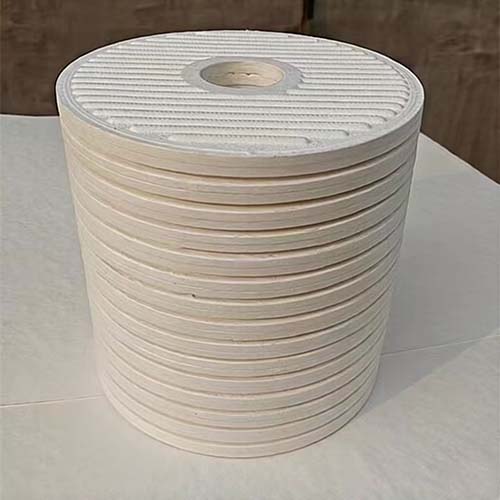
Offline filtration systems use ultra-fine filtration media to continuously remove fine contamination particles from hydraulic oil and lubrication oil.
By improving oil cleanliness and lowering ISO cleanliness codes, offline filtration helps reduce wear on:
Pumps
Valves
Bearings
Gearboxes
Cleaner oil helps extend equipment life and improve long-term system reliability.
Extended Oil Service Life
Offline oil filtration continuously removes contamination, oxidation products, and sludge from circulating oil.
As a result:
Oil degradation is reduced
Oil change intervals can be extended
Oil disposal costs can be lowered
This is especially important for large industrial lubrication systems where oil replacement costs are high.
Reduced Downtime
Unlike some maintenance procedures that require shutdowns, offline filtration systems can operate continuously while equipment is running.
This helps:
Reduce shutdown maintenance
Improve production continuity
Lower unplanned downtime risks
For many industrial plants, reduced downtime directly translates into lower maintenance costs and higher productivity.
Lower Maintenance Costs
By improving oil cleanliness and reducing contamination-related failures, offline filtration helps companies reduce:
Emergency maintenance
Spare parts replacement
Oil replacement frequency
Overall operating costs
Offline oil filtration has become an important part of predictive maintenance strategies in many industries.
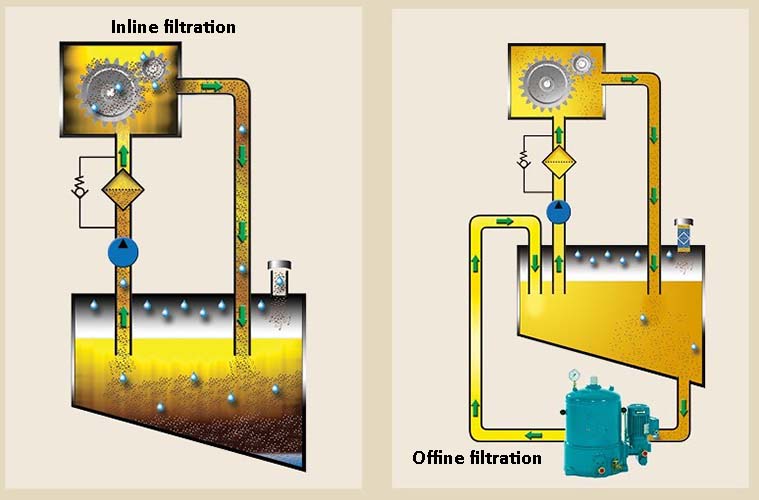
4. Why Offline Filtration Is More Effective for Fine Filtration
Inline filters are essential for protecting hydraulic and lubrication systems during operation. However, because inline filters must handle full system flow and pressure conditions, their filtration capability is often limited by:
Pressure drop requirements
Flow stability
System operating conditions
For example, overly fine suction filtration can restict oil flow and lead to pump cavitation. Offline filtration systems operate independently from the main circulation loop, allowing the use of:
Ultra-fine filtration media
Deep filtration technology
Cellulose filter inserts
This makes offline filtration more effective for removing very fine contamination particles, typically 1-10 micron and improving long-term oil cleanliness management.
In many industrial oil filtration applications, offline filtration is used together with inline filtration as part of a complete contamination control strategy.
5. Improving Oil Cleanliness with FiltraMate Solutions
At FiltraMate, we provide high-quality offline oil filtration solutions and replacement filter inserts compatible with original CJC fine filtration systems.
Our cellulose filter inserts are designed to deliver filtration performance equivalent to OEM standards and can be directly used as replacements for original CJC filter elements.
Our products portfolio includes HDU series offline fine filters, and multiple filter inserts series: B type, A type, F type, BLAT type, BLA type,VRi type, etc
If you are looking for equivalent options to OEM filters, please feel free to contact us. Email: [email protected], WhatsApp: +86 133 4666 0396