Depth Filtration for Oil Conditioning: CJC, Triple R, GreenOil, Europafilter and Delta-Xero
What do these filtration technologies have in common, and why are they widely used for industrial oil conditioning?
If you work with industrial oil filtration, you may have come across names such as CJC, Triple R (RRR), GreenOil, Europafilter, and Delta-Xero.
Their filter elements may look different, and their media construction and filtration technologies are not identical. However, they share a similar filtration philosophy: instead of simply protecting individual components, they focus on continuously cleaning and conditioning the oil itself.
This makes them particularly interesting for hydraulic and lubrication systems where long-term oil cleanliness, oil life, and equipment reliability are important.
So, what do these filtration technologies have in common?
1. Why Depth Filtration Works Well for Oil Conditioning
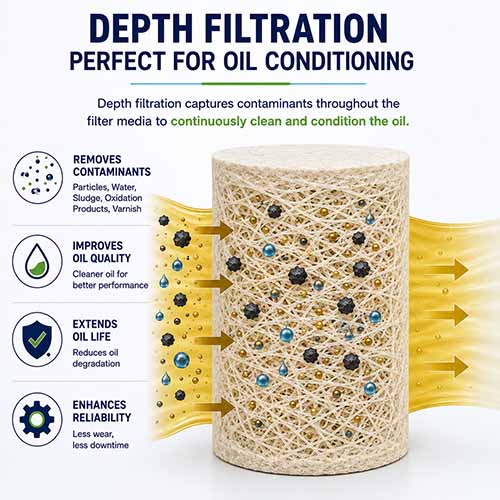
Unlike surface filtration, where contaminants are primarily captured on the surface of the media, depth filtration captures contaminants throughout the thickness of the filter media. for more information about surface filtration and depth filtration, please read following article:
Depth Filter vs Surface Filter: Which Filtration Technology Fits Your Application?
But the real advantage in oil conditioning goes beyond the filtration mechanism itself.
From Oil Filtration to Oil Conditioning
In many conventional hydraulic systems, filters are installed primarily to protect critical components such as pumps, valves, and bearings from damaging particles.
Depth filtration systems often take a broader approach.
Depending on the filter media and technology used, they may help control:
Fine solid particles
Free and emulsified water
Sludge
Oxidation products
Varnish or varnish precursors
Other oil degradation products
The objective is therefore not simply to pass oil through a filter once, but to continuously maintain the condition of the oil over time.
This is where offline and bypass filtration become particularly useful.
Many depth filtration systems operate independently of the main hydraulic or lubrication circuit:
Reservoir → Pump → Depth Filter → Reservoir
Instead of handling the full system flow, a relatively small and controlled volume of oil continuously passes through the filter media.
This combination of controlled flow, thick filtration media, and continuous circulation allows the filter to progressively remove contamination from the entire oil reservoir.
In simple terms:
Low Flow + Depth Media + Continuous Circulation = Effective Oil Conditioning
2. Five Representative Depth Filtration Technologies
Although these brands follow a broadly similar oil-conditioning philosophy, each has developed its own filter media, element construction, and approach to contamination control.
CJC Filter Inserts
C.C.JENSEN (CJC) is probably one of the best-known names in offline oil filtration and depth filtration.
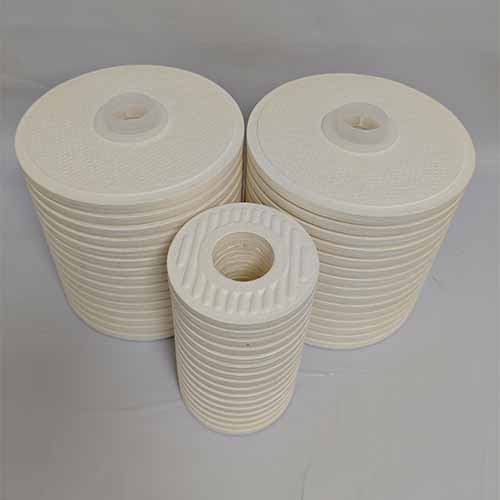
CJC filter inserts use specially processed cellulose fibres formed into bonded discs, creating a three-dimensional filtration structure. Instead of contaminants accumulating only on the surface, particles are captured throughout the depth of the filter mass, providing very high dirt-holding capacity.
CJC combines these inserts with dedicated offline filtration units that continuously circulate oil independently of the main equipment circuit.
Different CJC filter insert technologies are designed for different contamination problems. Standard cellulose inserts can address particles, water, acidity and oil degradation products, while BLAT-type inserts are designed for applications with higher water ingress and VRi-type media target varnish and oxidation products.
This makes CJC widely applicable to hydraulic oils, gear oils, lubrication systems, turbines, marine equipment, wind turbines and other industrial oil systems.
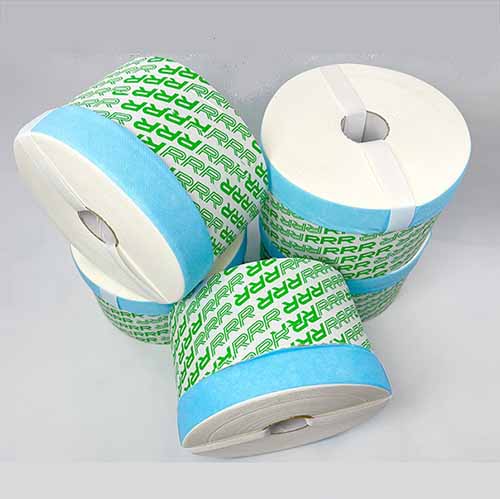
Triple R / RRR Filter Elements
Triple R, also commonly referred to in the market as RRR, takes a similar oil-conditioning approach through bypass and offline filtration.
Its filter design forces oil through a relatively thick engineered filter medium. According to Triple R, some elements provide a filtration path of approximately 114 mm, with different regions of the media capturing progressively smaller contaminants.
Cellulose-based versions can also absorb water and retain oxidation residues such as sludge and varnish. Triple R additionally offers different filter media, including cellulose, polyester and polypropylene, depending on the application.
The technology is commonly applied to hydraulic systems, lubrication systems, gearboxes, industrial machinery and wind turbines, where continuous oil cleaning can help maintain lower contamination levels and reduce wear.
GreenOil Filter Elements
GreenOil is another name encountered in the field of oil purification and continuous oil maintenance.
Like other systems in this category, the basic philosophy is to continuously remove contamination from circulating oil rather than relying only on the machine's primary full-flow filter.
This type of filtration approach is particularly relevant in applications where oil represents a significant operating cost or where extending oil and component life can reduce maintenance requirements.
GreenOil systems are especially associated with marine and industrial oil purification applications, making them another interesting example of how depth or bypass filtration can be used as part of a broader oil-management strategy.
Europafilter Cartridges
Europafilter cartridges of EFOLEX, now part of SKF's portfolio following a 2021 acquisition, also belong to this broader family of oil-conditioning technologies.
Europafilter combines multiple oil-conditioning functions in a single filtration system. Its EF500HY technology is designed to remove fine particles down to 0.1 μm, capture oxidation by-products such as deposits and resins, and reduce free, emulsified, and bound water in the oil.
According to the manufacturer, the filter can retain up to 3 kg of contaminants and absorb up to 3 liters of water, helping control contamination and slow oil degradation.
Europafilter therefore shares an important philosophy with CJC, Triple R and similar technologies:
keep the oil clean continuously instead of waiting for contamination to reach a critical level.
Delta-Xero Filter Cartridges
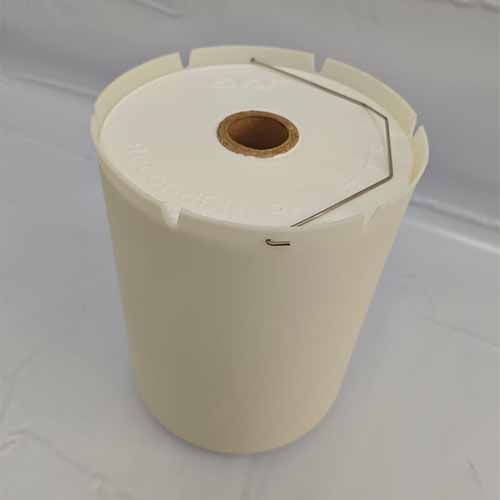
Delta-Xero takes a somewhat different technical approach with its capillary filtration technology, but the overall oil-conditioning philosophy is very similar.
Its DXO cartridges are used in offline systems that continuously draw fluid from the reservoir, pass it through microscopic filtration pathways, and return the conditioned fluid to the system.
According to Delta-Xero, its cartridges are designed to remove very fine particulate contamination together with water, varnish, sludge, resin and other oxidation products. The company offers systems for hydraulic oil, gear oil, turbine oil, compressor oil and other industrial fluids.
The systems typically operate at relatively low flow rates compared with main-line hydraulic filtration, reinforcing the same basic concept found across this category: continuous, controlled oil conditioning rather than high-flow component protection.
3. What Do These Filter Elements Have in Common?
Looking across these different technologies, several common characteristics become clear.
1) Depth-Oriented Filtration
Instead of relying primarily on surface capture, these technologies use a substantial volume or depth of filtration media to retain contamination.
This provides more space for contaminants and supports high dirt-holding capacity.
2) Fine Contamination Control
These filters are designed not only for larger visible particles but also for the fine contamination that can contribute to long-term wear, oil degradation and reliability problems.
3) High Dirt-Holding Capacity
Using a larger volume of filter media allows contaminants to be distributed throughout the element rather than concentrated only on its surface.
This is particularly valuable for continuous oil-cleaning applications.
4) Offline or Bypass Operation
Many of these technologies operate with a relatively small, controlled flow independent of—or bypassing—the main lubrication or hydraulic circuit.
This allows the oil reservoir to be cleaned continuously without requiring the filter to handle the entire system flow.
5) Oil Conditioning, Not Just Particle Filtration
Perhaps the most important similarity is their overall objective.
Depending on the particular filter technology, these systems can target not only particles but also water, sludge, varnish and other oil degradation products.
Their common goal can be summarized simply:
Cleaner Oil → Longer Oil Life → Better Equipment Reliability
4. Different Technologies, the Same Goal
CJC, Triple R, GreenOil, Europafilter and Delta-Xero should not be considered technically identical products.
Their filter media, internal construction, flow characteristics, filtration efficiency, water-handling capability and contaminant-removal mechanisms can differ considerably.
What connects them is the broader philosophy behind their use:
Continuously maintaining cleaner oil rather than relying only on conventional full-flow filtration.
Different technologies may achieve this in different ways, but the goal remains similar—better oil condition, reduced contamination and improved equipment reliability.
5. FiltraMate Alternative Depth Filter Elements
At FiltraMate, we manufacture alternative depth filter elements for CJC and Triple R (RRR). For GreenOil, Europafilter, and Delta-Xero, we can help you get original filter elements to meet different customer requirements.
Our focus is not simply dimensional interchangeability. Filter media, filtration performance, operating fluid and application conditions all need to be considered when developing a reliable replacement element.
We also support customized depth filter elements for specific oil-filtration applications.
🤝 Looking for an alternative depth filter element or need help identifying a filter? Feel free to connect with FiltraMate.