
Why Does a Hydraulic Filter Clog Just Days After an Oil Change?
You have just changed the hydraulic oil.
Three days later, the return-line filter triggers a differential pressure alarm.
The first reaction may be: Is there something wrong with the filter element?
So the filter is replaced. A few days later, the same alarm appears again.
At this point, repeatedly replacing filter elements is no longer troubleshooting.
A differential pressure alarm does not necessarily mean poor filter quality. Oil temperature, flow rate, bypass condition, used-filter inspection, oil analysis, and oil-mixing history should be evaluated together to determine whether the real cause is particles, water, sludge, varnish—or simply a false clogging alarm.
The key principle is simple:
A filter alarm tells you that resistance to flow has increased. It does not tell you why.
1. Differential Pressure Does Not Measure Contamination Directly
A filter differential pressure indicator measures the pressure difference between the inlet and outlet of the filter.
As contaminants accumulate in the filter media, differential pressure (ΔP) normally increases.
But contamination is not the only factor.
The same filter element can show significantly higher ΔP when:
Oil temperature is low
Oil viscosity is high
Flow rate increases
Flow is pulsating
The filter media becomes deformed or locally restricted
This is why a brief alarm during cold startup that disappears after the oil warms up is very different from an alarm that continues during stable operation.
Before removing the filter element, record the oil temperature, flow condition, pump speed, operating state, and duration of the alarm.
For electronic differential pressure switches, the sensing ports, wiring, and zero point should also be checked.
Only when contamination loading is supported by evidence should the alarm be treated as genuine filter clogging.
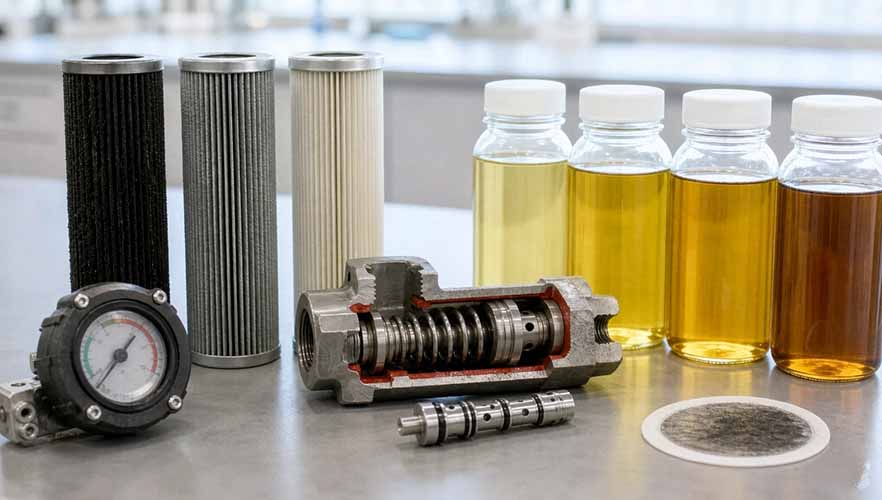
The filter element, bypass assembly, oil sample, valve core, and diaphragm should be evaluated within the same chain of evidence
2. Check the Bypass Valve at the Same Time
When differential pressure exceeds the bypass valve setting, some hydraulic filters allow oil to bypass the filter media.
This is a protective function designed to prevent element collapse or interruption of oil flow. It should not become the normal operating condition.
A fatigued spring, stuck bypass valve, incorrect filter element, wrong installation direction, or mismatched element can allow insufficiently filtered oil to circulate through the system.
When investigating an alarm, therefore, check:
Whether the bypass valve has opened
Whether it resets correctly
Whether the correct filter element is installed
Whether the element's differential pressure capability matches the application
Simply increasing the alarm setting may make the warning disappear without solving the problem.
You may only be making the warning quieter.
3. Don't Throw Away the Used Filter—Cut It Open
A used filter element can provide valuable evidence about what is happening inside the hydraulic system.
Different deposits may point in different directions.
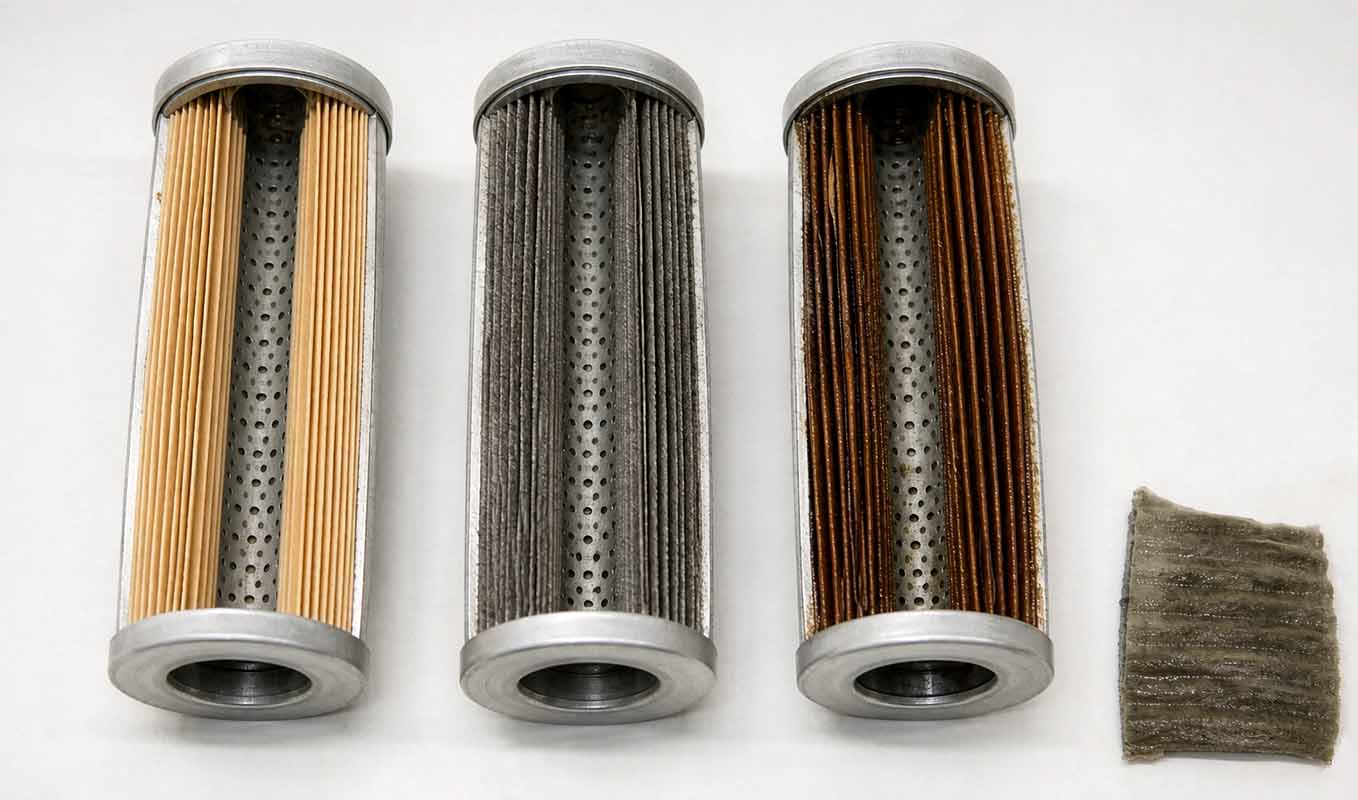
Gray or black fine particles may be associated with metallic wear, seal debris, or external dust.
Brown, sticky deposits may indicate oxidation products, varnish, resin, or old sludge.
Whitish deposits or swollen media may be associated with water, emulsification, or other polar contaminants.
Crushed pleats or separated end caps may indicate excessive differential pressure, reverse flow, incorrect installation, or material incompatibility.
Appearance alone cannot confirm the root cause, but it provides a useful starting point.
Keep the used element, photograph it, record its installation direction, and cut the media open to compare the upstream and downstream surfaces.
For critical systems, representative deposits can also be examined through membrane analysis, microscopy, or elemental analysis.
If large quantities of fresh metallic particles are found, changing the oil again may not solve the problem.
The real question becomes:
Where are those particles being generated?
4. New Oil Is Not Necessarily Clean Oil
Fresh hydraulic oil may meet its specification when it leaves the production facility, but that does not guarantee that it remains clean enough after transportation, storage, transfer, drum opening, and filling.
Dust can enter through drum breathing. Funnels and containers may be reused. Filter-cart hoses may be left uncapped.
All of these can introduce contamination.
For critical hydraulic systems, it is good practice to define the required ISO 4406 cleanliness level, filter new oil during filling, and verify cleanliness from a representative sampling point.
There is another issue after an oil change. please refer to this article: ISO 4406 Cleanliness Codes Explained for Industrial Oil Systems
Fresh oil can disturb contamination already present inside the system.
Its solvency and flushing action may release old sludge and deposits from reservoir bottoms, piping, valve blocks, and other low-flow areas.
If the reservoir is drained without removing these deposits, the fresh oil simply inherits the old contamination.
So when a new filter loads rapidly after an oil change, it does not automatically mean the filter is poor quality.
Sometimes, it means the filter is doing exactly what it should:
capturing contamination that has just been released from the system.
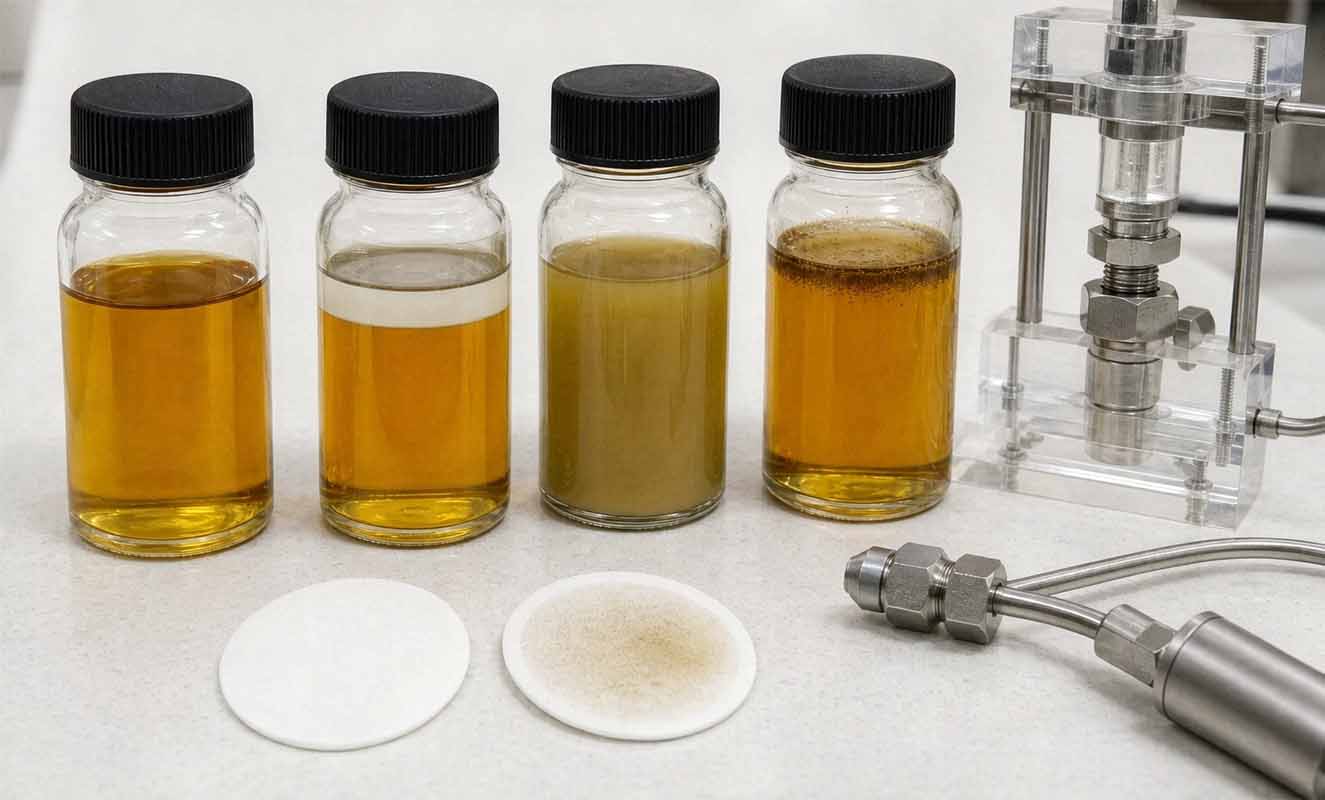
5. Water and Oil Mixing Can Create “Soft Clogging”
Water does not always make hydraulic oil look milky.
Water can exist in oil in three forms:
Dissolved water → Emulsified water → Free water
A small amount may remain dissolved in the oil. As water content increases, emulsified and eventually free water may appear.
Depending on the insert type and operating conditions, FiltraMate CJC alternative filter elements are designed to help remove water contamination—including dissolved, emulsified, and free water—while simultaneously removing particles from the oil.
Water contamination can promote corrosion, accelerate oil degradation, affect additives, and contribute to deposits inside the system.
Typical sources include:
Oil cooler leakage
Ineffective reservoir breathers
Condensation caused by temperature changes
Poor oil storage
Water entering outdoor drums or reservoirs
Oil mixing can create another type of problem.
Two hydraulic oils may both be classified as L-HM 46, but this does not necessarily mean their additive systems are fully compatible.
Different demulsifiers, antifoam additives, rust inhibitors, and base-oil systems can interact after mixing.
The oil may still look clear while its filterability deteriorates or fine, soft deposits begin to form.
For critical equipment, compatibility should therefore be checked before changing oil brands or mixing different products.
6. Varnish, Sludge and Oil Degradation Products Can Also Load the Filter
Not every filter blockage is caused by hard particles.
High operating temperatures, localized hot spots, extended oil service intervals, and antioxidant depletion can generate oil degradation products.
Some remain soluble while the oil is hot. When temperature falls or oil chemistry changes, they may precipitate as varnish, resin, sludge, and other soft deposits.
These contaminants can accumulate on:
Servo and proportional valves
Valve spools
Bearings
Coolers
Reservoir surfaces
Filter media
And they may not always be fully reflected by conventional particle counting.
If the used filter element shows brown, sticky deposits, the oil becomes darker, or proportional valves begin to stick at low speeds, the problem may involve oil degradation rather than ordinary particle contamination.
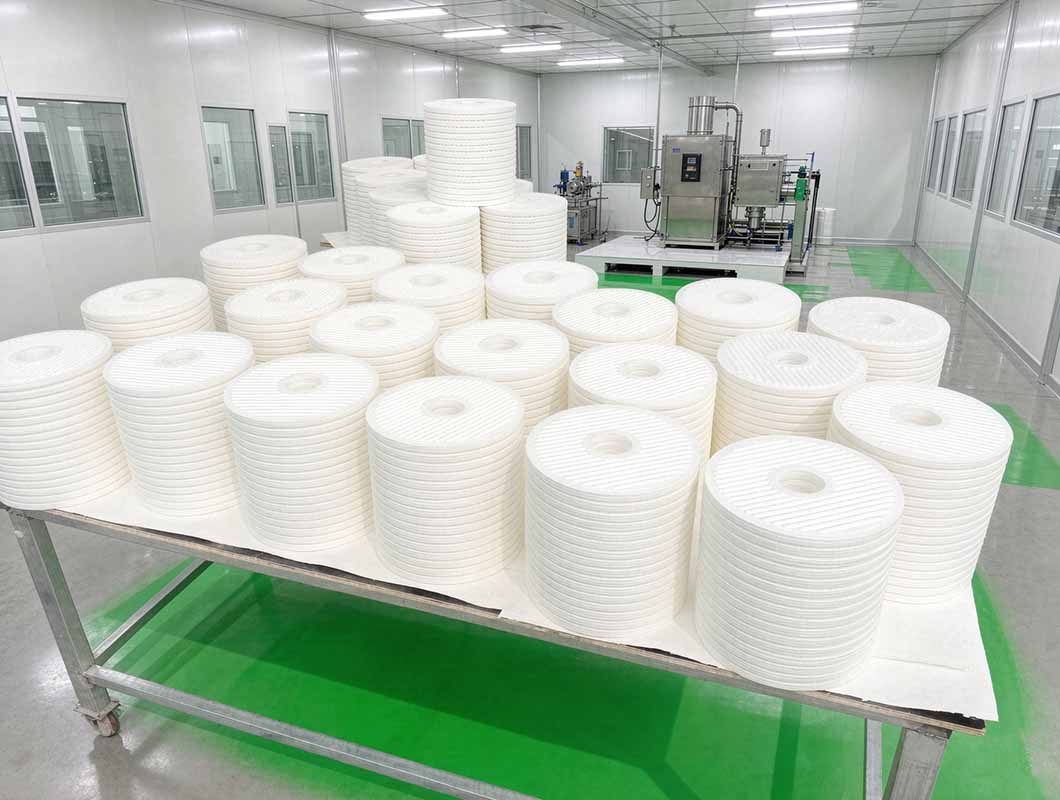
In these situations, FiltraMate CJC alternative filter elements can be used for offline oil filtration to help remove not only fine particles and water, but also oil degradation products such as sludge, resin, and varnish.
This makes offline fine filtration particularly useful where the objective is not simply to reduce particle counts, but to improve overall oil cleanliness and condition.
Simply installing a finer conventional filter may cause the differential pressure alarm to appear sooner without addressing the underlying contamination source.
Likewise, simply replacing the oil may leave existing varnish and sludge deposits inside the system.
7. A Four-Step Troubleshooting Process
Instead of replacing filter after filter, use a structured troubleshooting process.
Step 1 — Confirm the alarm
Compare cold-start and normal operating differential pressure. Check oil temperature, flow rate, the ΔP indicator, and pressure sensing ports.
Step 2 — Check the filter assembly
Confirm the filter model, installation direction, bypass valve, seals, and whether the element has been deformed.
Step 3 — Inspect the used element and analyze the oil
Cut open the filter element and examine the deposits. Test water content, particle contamination, viscosity, and oil condition where appropriate.
Step 4 — Identify the source before choosing the treatment
Hard particles may point toward contamination ingress or component wear.
Water requires investigation of coolers, breathers, storage conditions, and condensation.
Brown, soft deposits may require investigation of oxidation, varnish, sludge, operating temperature, or oil compatibility.
Cold-start alarms may lead back to viscosity, flow rate, and filter sizing.
The treatment—whether filtration, dehydration, flushing, oil purification, partial oil replacement, or mechanical inspection—should follow the evidence.
A Clogged Filter Is Evidence
When one filter element clogs, it tells you that it has captured something.
When filter elements clog repeatedly, it tells you something more important:
The contamination source may still be present.
The real cost saving is not simply extending the life of one filter element. It is preventing the same contaminants from repeatedly entering—or being generated inside—the hydraulic system.
At FiltraMate, we manufacture replacement hydraulic and lubrication filter elements as well as CJC alternative filter inserts and offline fine filtration solutions for industrial oil systems.
Our filtration solutions can help remove fine particles, water, sludge, resin, varnish, and other oil degradation products, supporting improved oil cleanliness and longer oil and equipment service life.
🤝 If you are dealing with rapid filter clogging, oil contamination, water, or varnish problems, connect with FiltraMate to discuss your filtration application.