
Hydraulic Filter Elements Explained: A Practical Guide to Selection and Performance
Most hydraulic failures are not caused by pumps, valves, or cylinders—they are caused by contamination.
In fact, contamination remains one of the leading causes of hydraulic system downtime worldwide. Selecting the right hydraulic filter element is therefore one of the most important decisions in any oil cleanliness program.
But choosing a filter is not simply a matter of selecting a micron rating.
Flow capacity, Beta efficiency, filter media, differential pressure, sealing materials, and operating conditions all influence filter performance and equipment reliability.
In this article, we'll explain the six key factors engineers should consider when selecting hydraulic filter elements for industrial hydraulic and lubrication systems.
Flow Rate—Can Your Filter Handle the System Demand?
Many people focus on micron ratings and overlook one of the most important specifications: flow capacity.
A filter element must be capable of handling the required system flow without creating excessive pressure drop.
As a rule of thumb:
Rated Flow ≥ Actual Flow × 1.5–2
Key factors affecting flow include:
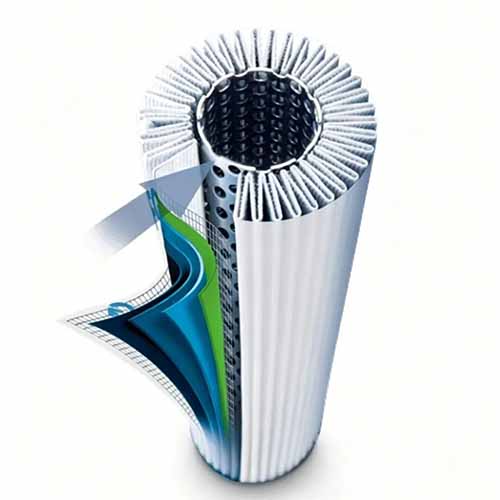
Filtration area
Pleat design
Media permeability
Oil viscosity
Operating temperature
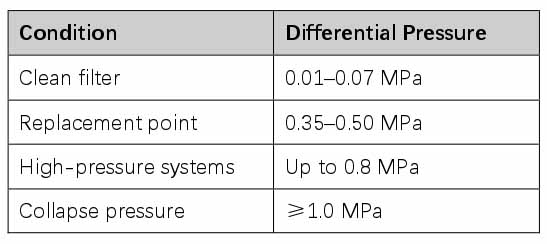
You should also monitor differential pressure:
Filtration Rating—More Than Just Microns
When discussing hydraulic filtration, the first question is usually:
"What micron rating do I need?"
Typical hydraulic filtration ratings include: 1 μm, 3 μm, 5 μm, 10 μm, 25 μm, 40 μm, 100 μm
However, filtration performance should not be evaluated by micron rating alone.
Modern hydraulic filtration relies on ISO 16889 Beta Ratios.
For example:
β5(c) ≥ 200 = 99.5% efficiency at 5 μm
β10(c) ≥ 1000 = 99.9% efficiency at 10 μm
Typical recommendations:
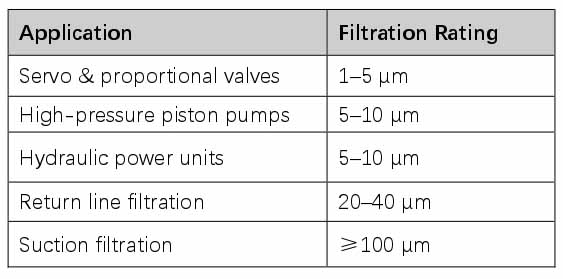
Ultimately, the goal is not simply to achieve a micron rating, but to maintain the required ISO 4406 cleanliness level.
Choosing the Right Filter Media
Filter media is arguably the most important component of a hydraulic filter element. It directly affects filtration efficiency, dirt-holding capacity, differential pressure, service life, and ultimately the cleanliness level of the hydraulic system.
The four most commonly used filter media in hydraulic and lubrication systems are discussed below.
Glass Fiber (Microglass)
Glass fiber, often referred to as microglass, is the industry standard for high-performance hydraulic filtration. It is manufactured from continuous fine glass fibers arranged in a multilayer structure, providing excellent particle capture throughout the media thickness. Typical operating temperature ranges from -20°C to 120°C.
Microglass offers outstanding Beta efficiency and high dirt-holding capacity, making it particularly suitable for systems requiring strict ISO 4406 cleanliness levels.
Typical characteristics include:
Filtration rating: 1–25 μm
High Beta efficiency
High dirt-holding capacity
Excellent differential pressure resistance
Disposable
For applications where oil cleanliness is critical, microglass remains the preferred choice.
Stainless Steel Mesh
Stainless steel mesh is commonly used when reusability and mechanical strength are more important than ultra-fine filtration. Typical operating temperature can be up to 300°C.
Available in woven mesh or multilayer sintered constructions, these elements offer exceptional resistance to temperature, pressure, and corrosion.
Typical characteristics include:
Filtration rating: 10–100 μm
Reusable and washable
Excellent corrosion resistance
High mechanical strength
Lower dirt-holding capacity
Although stainless steel mesh is not designed to achieve very low ISO cleanliness levels, it performs exceptionally well in harsh industrial environments.
Polyester and Synthetic Fiber Media
Polyester and synthetic fiber media offer a practical balance between performance and cost. Manufactured from PET or polypropylene fibers, these materials provide good flexibility and resistance to moisture while maintaining moderate filtration efficiency. Typical operating temperature is from -20°C to 120°C.
Typical characteristics include:
Filtration rating: 10–40 μm
Cost-effective
Good water resistance
Moderate dirt-holding capacity
Good flexibility
Synthetic fiber media are often selected for medium-duty applications where economical operation is a priority.
Cellulose
Cellulose remains one of the oldest and most widely used filtration media in the industry. Produced from wood pulp or cotton fibers, it offers an economical solution for low-pressure and general-purpose hydraulic applications. Typical operating temperature is usually from -20°C to 100°C.
However, cellulose is more susceptible to moisture and hydrolysis than synthetic media, making it less suitable for applications involving water contamination.
Typical characteristics include:
Filtration rating: 5–25 μm
Economical
Widely available
Disposable
Lower dirt-holding capacity
For many industrial users, cellulose continues to provide a reliable and cost-effective filtration solution.
Construction Matters—End Caps and Support Cores
Even the best filter media can fail if the filter structure is weak.
Key components include:
Carbon steel end caps
Stainless steel support cores
Engineering plastics
A well-designed structure ensures:
Proper media support
Reliable sealing
High collapse resistance
Long service life
This is particularly important in high-pressure hydraulic applications.
Potting Compounds (End Cap Adhesives)—The Hidden Component
Potting compounds are rarely discussed, yet they play a critical role in filter reliability.
The most common options include:
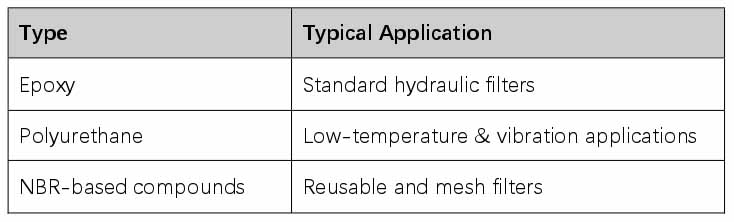
Among these, epoxy remains the industry standard due to its excellent oil resistance and bonding strength.
Don't Overlook Seal Materials
Seal compatibility is often overlooked during filter selection.
The wrong seal material can lead to leakage, premature failure, or incompatibility with hydraulic fluids.
Common seal materials include:
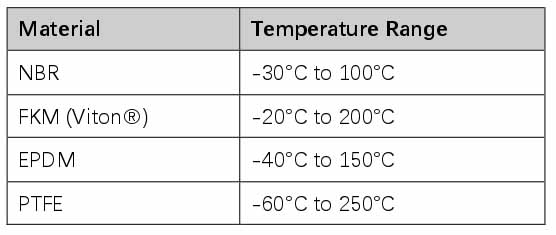
For most mineral oil hydraulic systems, NBR remains the standard choice, while FKM is preferred for high-temperature and synthetic fluid applications.
What FiltraMate Can Do for You
Selecting a hydraulic filter element involves much more than choosing a micron rating.
Flow capacity, filtration efficiency, filter media, construction quality, and seal compatibility all play a role in determining system performance.
Ultimately, the purpose of hydraulic filtration is simple:
Deliver cleaner oil, improve equipment reliability, and extend service life.
If you're responsible for hydraulic or lubrication systems, investing time in selecting the right filter element can significantly reduce downtime, lower maintenance costs, and improve overall equipment performance.
And remember—customers don't buy filter elements. They buy reliability.
At FiltraMate, we provide both custom hydraulic filter elements and high-quality replacements for OEM part numbers from leading brands. Whether you're maintaining an existing system or developing a new filtration solution, we're always happy to discuss your application and help you find the right filter.